About Sanofi Global
Sanofi is a global healthcare company headquartered in Paris, France, focused on discovering, developing, and delivering innovative medicines and vaccines. As an R&D-driven, AI-powered biopharma company, Sanofi works to improve patient outcomes in areas including immunology, rare diseases, oncology, neurology, and vaccines, serving millions of people worldwide.
As a leader in a highly regulated and patient-focused industry, Sanofi is deeply committed to ethics, inclusion, and the wellbeing of both patients and employees. This commitment extends beyond healthcare delivery to the workplace itself, recognizing that employees bring their full lives to work, including moments of vulnerability such as serious illness or caregiving. It is this belief that led Sanofi to look closely at how it was supporting its own people through some of life's most difficult moments.
The challenge
For Sanofi, the challenge was not simply about awareness, it was about action.
The Cancer & Work – Acting Together program had already been established in France and extended globally in 2024, creating a framework of policies and support systems designed to help employees navigate the impact of serious illness on their working lives — from diagnosis, through treatment, to return to work and beyond.
Yet despite this foundation, a critical gap remained. As the program reached a more diverse, global workforce, many managers and colleagues still lacked the confidence and clarity to apply these principles in practice. Conversations were often avoided, assumptions were made, and opportunities to provide meaningful support were missed.
The challenge was therefore not to build awareness from scratch, but to translate an existing commitment into consistent, confident behavior at scale — across cultures, geographies, and roles.
The solution
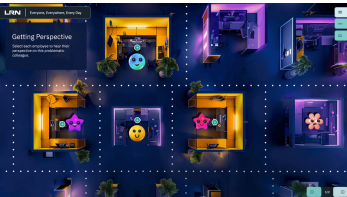
To bridge this gap, Sanofi developed a mandatory, global eLearning course as a core component of the Cancer & Work – Acting Together program. Rather than introducing new policies, the course was designed to bring the program's principles to life — placing real workplace situations at the center of learning and equipping every employee with the practical skills needed to act on them.
Through scenario-based storytelling, learners explore moments such as disclosing illness, supporting colleagues, and managing a return to work, developing the judgment and confidence needed to respond effectively.
Rather than relying on traditional testing, the course was intentionally designed to create space for reflection, encouraging learners to engage with complexity rather than seek simple answers. Grounded in real employee experiences and delivered in 19 languages, the training ensures both authenticity and global relevance
This design choice was reinforced by strong executive sponsorship, which signaled that the course was not a routine compliance exercise but a genuine cultural priority.
Embedded within the broader Cancer & Work – Acting Together program, the learning experience functions as more than standalone training — it acts as a catalyst for cultural change, reinforcing the shared responsibility every employee has in creating a workplace where people feel understood, supported, and valued through life's most challenging moments.
Results
The course quickly demonstrated strong engagement and impact across Sanofi’s global workforce. Completion reached 98.4%, reflecting both the importance of the topic and the effectiveness of its delivery, while learners remained actively engaged throughout the experience, with an average completion time of 26.5 minutes. Satisfaction scores averaged 4.7 out of 5, highlighting the program’s relevance and emotional resonance.
More importantly, the learning translated into meaningful behavior change. Employees demonstrated a stronger understanding of how to communicate openly, adapt to work thoughtfully, and utilize available support systems. The course also revealed key areas of uncertainty, particularly around return-to-work expectations and initiating sensitive conversations, allowing Sanofi to refine messaging and reinforce critical behaviors.
These outcomes extend beyond learning metrics. By increasing confidence and fostering more consistent responses, the course supports workforce continuity, strengthens retention, and enhances psychological safety. Delivered at scale with a highly efficient investment, it proves that impactful, human-centered learning can drive both cultural and business value simultaneously.
Conclusion
Sanofi’s Cancer & Work program demonstrates the impact organizations can have when inclusion is embedded in everyday experiences, not simply expressed as a principle. By focusing on real workplace interactions and equipping employees to navigate conversations and situations involving serious illness or caregiving responsibilities with confidence and clarity, the course helps foster a culture where support is recognized as a collective responsibility.
As Sanofi continues to evolve and expand this initiative, integrating support more seamlessly into the flow of work, it reinforces a simple but powerful belief: that the workplace can be a source of stability, dignity, and a sense of belonging, even during life’s most challenging moments. Through this commitment, Sanofi is helping build a workplace where people can bring their whole selves to work and feel supported when they need it most.
Ultimately, it aims to create a culture where no one faces serious illness alone, helping employees and managers reconcile the demands of illness and work in a more flexible, collective way.