

Manufacturing organisations face unique compliance challenges across production sites, suppliers, overseas operations, and frontline workforces. From quality misconduct and workplace safety to supplier oversight and export controls, organisations must navigate an increasingly complex risk landscape while maintaining operational excellence.
Effective manufacturing compliance training helps employees understand their responsibilities, make better decisions, and reinforce a culture of accountability. However, designing programmes that are both relevant and scalable across diverse operational environments remains a significant challenge.
This article explores the key compliance risks facing manufacturing organisations, the training topics that matter most, and practical approaches for strengthening programme effectiveness across frontline employees, managers, and third-party partners.
Why Manufacturing Compliance Training Matters
Incidents involving data falsification, skipped inspections, unauthorised specification changes, and workplace misconduct continue to create significant financial, operational, and reputational risks for manufacturers worldwide.
As regulatory scrutiny increases, organisations must ensure compliance expectations are consistently understood and applied across the business. Effective compliance training is no longer simply a legal requirement—it has become an essential part of maintaining product quality, workplace safety, and operational integrity.
At the same time, manufacturing organisations face several unique challenges:
|
Challenges |
Why It Matters |
| 1. Diverse risk profiles |
Factory workers, supervisors, engineers, procurement teams, and sales personnel face very different compliance risks. |
| 2. Geographic complexity |
Global manufacturing operations must address local regulations, languages, and cultural differences. |
| 3 Extended supply chains |
Compliance risks increasingly extend beyond employees to suppliers, contractors, and third parties. |
In January 2026, Japan strengthened its framework governing supplier and subcontractor relationships through the introduction of the Act on Proper Transactions with Small and Medium-sized Contractors.
The change reflects a broader trend across many markets: regulators increasingly expect organisations to demonstrate not only compliance policies, but also effective employee understanding and implementation. Without practical training and ongoing reinforcement, employees may unknowingly expose their organisations to compliance, operational, and reputational risks.
For manufacturing organisations, this makes effective compliance training more important than ever.
|
Related Article: What Is Compliance Training? Explore the importance of compliance training, how to develop an annual training plan, approaches to measuring effectiveness, and ways to use e-learning to support employee engagement. Includes examples for both new hires and managers. |
Key Compliance Risks in Manufacturing
As discussed earlier, compliance risks can vary significantly across functions and roles within a manufacturing organisation. To design effective compliance training programmes, organisations must first understand the risks employees are most likely to encounter in their day-to-day responsibilities.
Here are some of the most important compliance risks manufacturing organisations should address.
Quality Misconduct and Data Integrity
In recent years, manufacturers of all sizes have faced significant consequences following the discovery of long-standing quality and compliance failures. Incidents involving manipulated testing data, skipped inspections, and unauthorised process changes have resulted in substantial financial penalties, product recalls, and reputational damage.
Common examples include:
|
Compliance Risk |
Description |
| Falsifying or fabricating test data
|
Altering inspection or testing results to meet customer specifications or internal requirements. |
|
Skipped inspections |
Omitting required testing procedures while reporting them as completed. |
|
Unauthorised specification changes |
Changing materials, components, or manufacturing processes without obtaining customer approval. |
Workplace Safety, Labour Practices, and Harassment
Manufacturing environments depend on safe working conditions, responsible labour practices, and a culture of respect. Failing to address workplace safety and employment-related compliance obligations can expose organisations to significant legal, operational, and reputational risks.
Common examples include:
|
Compliance Risk |
Description |
|
Concealing workplace accidents |
Failing to report workplace injuries or incidents, resulting in violations of occupational health and safety regulations. |
|
Excessive working hours |
Overtime practices that exceed legal requirements due to production pressures or labour shortages. |
|
Workplace harassment |
Inappropriate behaviour arising from hierarchical work environments, performance pressure, or production targets. |
Effective compliance training should help employees and managers understand not only legal obligations, but also the behaviours and decisions that contribute to a safe, respectful, and compliant workplace.
Export Controls and Global Operations
For manufacturers operating across global supply chains, compliance with export controls, trade regulations, and local legal requirements is essential. Failure to comply can result in significant penalties, business disruption, and restrictions on international operations.
|
Compliance Risk |
Description |
|
Export control violations |
Exporting controlled technologies, products, or technical information without the necessary approvals or licences. |
|
Non-compliance with local regulations |
Failure to comply with country-specific environmental, labour, or industry regulations, including requirements such as RoHS, REACH, and TSCA. |
|
Bribery and corruption risks |
Improper payments, gifts, hospitality, or incentives involving government officials, customers, or business partners, potentially resulting in violations of regulations such as the U.S. Foreign Corrupt Practices Act (FCPA) or the UK Bribery Act. |
As manufacturing operations become increasingly global, organisations must ensure employees understand how international regulations apply to their roles and responsibilities. Compliance training plays a critical role in helping employees recognise and manage these risks before they lead to legal or operational consequences.
Supply Chain and Supplier Management
Manufacturing organisations are increasingly being held accountable not only for their own conduct, but also for the conduct of suppliers and third parties throughout the value chain.
Unfair treatment of suppliers, forced rework without compensation, or other procurement-related misconduct can result in regulatory scrutiny, financial penalties, and reputational damage. In addition, the presence of restricted substances governed by regulations such as RoHS or REACH within sourced components can lead to product recalls, export restrictions, or sales prohibitions.
At the same time, regulatory expectations continue to expand. Requirements such as the Corporate Sustainability Due Diligence Directive (CSDDD) are placing greater emphasis on identifying and managing human rights and environmental risks across the entire value chain. Manufacturers that work with European organisations may increasingly be expected to demonstrate visibility into issues such as forced labour, child labour, workplace safety violations, and environmental impacts occurring within supplier networks.
As a result, organisations must adopt a broader view of compliance—one that extends from raw material sourcing through production, distribution, and delivery to customers. Compliance is no longer limited to internal operations; it is increasingly viewed through the lens of responsible supply chain and supplier management.
Common examples include:
|
Compliance Risk |
Description |
|
Supplier compliance violations |
Unfair pricing pressure, payment delays, forced returns, or other practices that may violate supplier protection regulations. |
|
Human rights and environmental issues |
Forced labour, child labour, unsafe working conditions, or environmental harm occurring within supplier operations. |
|
Supply chain cybersecurity risks |
Third-party vendors or suppliers becoming the source of cyberattacks, data breaches, or intellectual property theft. |
The global ethics and compliance landscape is entering a period of significant change. Organisations can no longer rely on a traditional “check-the-box” approach to compliance.
Today, there is increasing pressure to identify risks earlier, use data more effectively, and ensure compliance expectations extend beyond employees to managers, suppliers, and third-party partners.
For manufacturing organisations, this means moving beyond awareness and focusing on how compliance is embedded into everyday decisions across the business.
|
|
Download the 2026 Ethics & Compliance Program Effectiveness Report – Japan EditionExplore key findings on programme effectiveness, data utilisation, manager enablement, and third-party oversight across Japanese organisations.
|
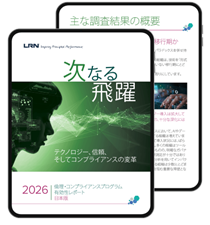
Watch the Video: Is Compliance Really Working?
Get an 8-minute overview of the key findings from the 2026 Ethics & Compliance Program Effectiveness Report – Japan Edition and what they mean for compliance leaders today.
Priority Compliance Training Topics for Manufacturing Organisations
Manufacturing organisations should prioritise training topics that address the operational, regulatory, and workforce risks most likely to affect day-to-day business activities. In many cases, compliance risks arise not from a lack of awareness, but from structural pressures such as production deadlines, cost constraints, labour shortages, and complex supply chains.
In addition, compliance training requirements vary significantly across departments and roles. The topics most relevant to production teams may differ considerably from those needed by procurement, engineering, legal, or sales functions.
The following areas are commonly prioritised across manufacturing organisations:
|
Training Topic |
Primary Audience |
Key Areas of Focus |
|
Quality misconduct and data integrity |
Production, quality assurance, and managers |
Data falsification, skipped inspections, unauthorised process changes |
|
Workplace safety and labour practices |
Factory employees and frontline supervisors |
Workplace accidents, excessive working hours, harassment prevention |
|
Fair procurement and supplier compliance |
Procurement and sourcing teams |
Fair supplier treatment, payment practices, responsible sourcing |
|
Export controls and global compliance |
Sales, engineering, legal, and compliance teams |
Export regulations, local regulatory requirements, anti-bribery compliance |
|
Supplier and third-party oversight |
Procurement, sustainability, and ESG teams |
Human rights, supplier education, responsible sourcing |
|
Information security and cybersecurity |
Engineering, product development, and IT teams |
Intellectual property protection, cybersecurity, supply chain security |
One area that deserves particular attention is supplier compliance and fair procurement practices. In Japan, manufacturing organisations account for a significant proportion of regulatory actions related to supplier treatment and subcontractor relationships. As a result, organisations should consider training that helps employees recognise situations where commercial pressures may conflict with compliance obligations and understand when to seek guidance or raise concerns.
More broadly, manufacturing organisations should ensure employees feel comfortable speaking up when faced with ethical dilemmas, operational pressure, or potential misconduct. Effective whistleblowing and reporting mechanisms are increasingly viewed as critical components of a mature compliance programme.
Recent amendments to Japan's Whistleblower Protection Act further reinforce the importance of maintaining effective reporting channels and ensuring individuals who raise concerns are protected from retaliation. Organisations are expected not only to prevent adverse treatment of whistleblowers, but also to demonstrate transparent and objective decision-making processes when addressing employee concerns.
Workplace safety training also remains a critical priority.
Manufacturing environments often involve risks associated with heavy machinery, moving equipment, and hazardous operations. Preventing incidents requires more than technical safeguards—it requires employees to recognise risks and make safe decisions in real time.
Many organisations therefore incorporate approaches such as Hazard Prediction Training (KYT) to help employees identify potential dangers before incidents occur. Combined with safety awareness programmes for new employees, contractors, and foreign workers, these initiatives can help strengthen safety culture and reduce operational risk across manufacturing sites.
|
LRN Compliance Training Courses LRN offers practical compliance training courses covering key risk areas including anti-bribery and corruption, harassment prevention, information security, trade compliance, and economic security.
Our solutions help manufacturing organisations deliver relevant training across frontline employees, managers, overseas operations, and supplier networks. |
Industry-Specific Compliance Training Priorities
The manufacturing sector covers a wide range of industries, each with its own regulatory requirements and risk profile. As a result, compliance training should be tailored to the specific risks associated with the products, services, and operational environments of each industry.
A useful starting point is to consider how a product failure, compliance breach, or operational issue could affect customers, public safety, critical infrastructure, or the broader supply chain.
Below are some of the key compliance training priorities by industry.
Pharmaceuticals and Life Sciences
Products in the pharmaceutical and life sciences sectors directly affect human health, making compliance failures particularly high risk. Deficiencies in product quality, clinical data, or regulatory reporting can lead to patient harm, regulatory enforcement actions, and significant reputational damage.
As a result, organisations must maintain rigorous standards throughout the product lifecycle, from research and development through manufacturing, regulatory approval, and post-market monitoring. In Japan, this includes compliance with the Pharmaceuticals and Medical Devices Act (PMD Act) as well as Good Quality Practice (GQP) and Good Vigilance Practice (GVP) requirements.
In addition, interactions with healthcare professionals and medical institutions require careful oversight. Improper incentives, gifts, or payments can create significant anti-bribery and corruption risks, particularly under regulations such as the U.S. Foreign Corrupt Practices Act (FCPA) and other international anti-corruption frameworks.
Common compliance training priorities include:
|
Compliance Training Topic |
Focus Area |
|
Pharmaceuticals and Medical Devices Act (PMD Act), GQP and GVP compliance |
Quality management and post-market safety management requirements for pharmaceutical and medical device companies in Japan. |
|
Data integrity |
Ensuring the reliability, accuracy, and integrity of clinical, non-clinical, and manufacturing data. |
|
Compliance with Industry Promotion Codes |
Preventing improper payments, gifts, hospitality, or other benefits provided to healthcare professionals and medical institutions. |
Automotive and Mobility
The automotive and mobility sector faces increasing regulatory scrutiny, particularly in areas related to vehicle certification, product quality, and supply chain oversight. Recent cases involving misconduct in vehicle certification and type approval testing have demonstrated how compliance failures can lead not only to reputational damage but also significant operational and financial consequences, including production and shipment suspensions.
In addition, complex multi-tier supplier networks create risks related to supplier treatment, quality assurance, and unauthorised specification changes. Even seemingly minor deviations in materials, components, or processes can contribute to product defects, recalls, and regulatory action.
Common compliance training priorities include:
|
Compliance Training Topic |
Focus Area |
|
Road Transport Vehicle Act and Type Approval Procedures |
Compliance with vehicle certification requirements, UN regulations, and testing protocols. |
|
Supply Chain Quality Assurance |
Management of global supply chains, trade compliance, and fair supplier relationships. |
|
Export Controls and Fair Supplier Practices |
Management of global supply chains, trade compliance, and fair supplier relationships. |
Electronics and High-Tech Manufacturing
The electronics and high-tech sector is characterised by intense competition, rapid innovation, and short product lifecycles. Organisations operating in this industry face significant risks related to intellectual property protection, export controls, information security, and economic security regulations.
Since many technologies and components have potential military or dual-use applications, failure to comply with export control regulations can result in severe penalties, including restrictions on international trade and placement on government-controlled entity lists. In addition, intellectual property disputes and data breaches can lead to substantial financial and reputational damage.
Common compliance training priorities include:
|
Compliance Training Topic |
Focus Area |
|
Intellectual Property Protection and Patent Compliance |
Managing patents, industrial designs, trade secrets, and preventing infringement of third-party intellectual property rights. |
|
Export Controls and Economic Security Compliance |
Preventing unauthorised transfer of controlled technologies, semiconductors, and dual-use products under export control regulations. |
|
Information Security and Data Management |
Protecting technical documentation, source code, customer information, and other sensitive business data from unauthorised access or disclosure. |
Chemicals and Advanced Materials
The chemicals and advanced materials sector faces significant environmental, safety, and quality-related risks. A major incident at a manufacturing plant or production facility can threaten public safety, result in substantial fines, and lead to operational shutdowns.
In addition, material specifications such as strength, purity, and heat resistance often form the foundation of downstream products across industries including automotive, electronics, and industrial manufacturing. As a result, failures in quality management can have far-reaching consequences throughout the supply chain.
Manipulation of testing or measurement data is a particularly serious concern. Inaccurate quality data can affect multiple downstream manufacturers and increase the risk of widespread product failures or recalls.
Common compliance training priorities include:
|
Compliance Training Topic |
Focus Area |
|
Environmental Regulatory Compliance |
Compliance with chemical regulations, air pollution controls, waste management requirements, and regulations such as RoHS and REACH. |
|
High-Pressure Gas Safety and Fire Prevention |
Preventing plant accidents, fires, explosions, and other operational safety incidents. |
|
Prevention of Testing and Inspection Data Manipulation |
Strengthening quality controls and preventing quality-related compliance violations. |
Food and Beverage
The food and beverage industry faces significant reputational risk due to its direct impact on consumers. Issues such as allergen labelling errors or foodborne illness incidents can affect large numbers of consumers and result in regulatory action, product recalls, and loss of customer trust.
The widespread use of social media has also increased the visibility of operational failures. Inappropriate employee behaviour, poor hygiene practices, or food safety incidents can quickly attract public attention and damage a company's brand reputation.
Common compliance training priorities include:
|
Compliance Training Topic |
Focus Area |
|
Food Sanitation Act and HACCP Compliance |
Hygiene management, prevention of contamination incidents, and food safety controls. |
|
Product Labelling and Advertising Compliance |
Accurate allergen labelling, country-of-origin declarations, and expiry date information. |
|
Food Defence and Product Protection |
Factory controls designed to prevent intentional contamination, tampering, or malicious interference with food products. |
Industrial Machinery and Heavy Industry
The industrial machinery and heavy industry sector faces elevated safety risks throughout both manufacturing and installation activities. Work involving heavy equipment, lifting operations, and large-scale machinery can result in serious workplace incidents if appropriate safety controls are not consistently followed.
The industry is also heavily involved in large-scale infrastructure projects, energy developments, defence contracts, and public procurement activities. As a result, employees may encounter complex ethical and compliance challenges related to bidding processes, government interactions, and international business practices.
Training programmes should therefore help employees recognise and navigate real-world compliance dilemmas that may arise during contract bidding, project delivery, and international business development.
Common compliance training priorities include:
|
Compliance Training Topic |
Focus Area |
|
Occupational Safety and Health Compliance |
Safe working practices for high-risk activities, including work at height, heavy lifting, and operation of large machinery. |
|
Anti-Cartel and Bid-Rigging Compliance |
Fair competition practices and proper bidding processes for government and infrastructure projects. |
|
Prevention of Foreign Official Bribery |
Anti-corruption requirements and prevention of improper payments in international infrastructure and industrial projects. |
Explore the LRN Compliance Training Course Catalogue to discover courses aligned to your industry, business function, and compliance priorities.
|
LRN Compliance Training Course Catalogue Explore compliance training courses covering 13 key risk areas, including anti-bribery and corruption, harassment and discrimination prevention, information security, health and safety, sanctions compliance, and trade regulations. |
Embedding Compliance into Frontline Operations
Manufacturing organisations often face a common challenge: ensuring compliance expectations are understood and applied consistently by frontline employees.
The following practices can help strengthen compliance awareness and reinforce desired behaviours across operational environments:
- Translate legal and compliance requirements into clear, practical actions.
- Use real-world near-miss incidents and workplace scenarios as training case studies.
- Recognise and encourage employees who report concerns or identify potential issues.
- Equip frontline supervisors and managers to serve as role models for compliance.
- Provide short, continuous learning opportunities rather than relying solely on one-time training events.
Embedding compliance into frontline operations requires more than periodic classroom sessions. Employees need opportunities to learn continuously, apply knowledge in realistic situations, and develop confidence in making appropriate decisions when faced with uncertainty.
AI-Powered Learning Experiences
Preventing bribery and corruption often requires employees to navigate situations where the line between relationship-building and inappropriate conduct is not always clear. Organisations therefore need governance frameworks and learning programmes that help employees make informed decisions before issues arise.
To support this, LRN offers AI-powered learning experiences, including gamified learning and conversational AI microlearning through Catalyst Engage.AI. These learning experiences present realistic ethical dilemmas and allow learners to engage in interactive conversations that encourage critical thinking and decision-making.
By creating opportunities to practise judgement in realistic situations, AI-powered learning can help employees build the confidence needed to make appropriate decisions and respond effectively when faced with ethical or compliance-related challenges.
Measuring Training Effectiveness Beyond Completion Rates
Training completion alone does not demonstrate programme effectiveness. Manufacturing organisations should establish processes that continuously evaluate, improve, and reinforce learning outcomes over time.
One effective approach is to incorporate the Plan–Do–Check–Act (PDCA) cycle into compliance programme management. This requires collaboration between compliance teams, quality assurance, health and safety functions, and business leaders to ensure training remains relevant and aligned with organisational risks.
Plan: Use Data to Continuously Improve Training Content
- Analyse data from whistleblowing and reporting channels.
- Review near-miss incidents and quality non-conformance reports.
- Identify emerging risks and areas requiring additional training.
- Introduce microlearning to support ongoing knowledge retention.
- Encourage frontline supervisors and team leaders to reinforce key learning messages.
- Integrate learning into everyday operational activities.
- Identify topics with consistently low assessment scores.
- Measure understanding as well as completion.
- Monitor indicators that may signal emerging compliance issues or misconduct risks.
Act: Report Insights and Drive Improvement
- Use training outcomes to assess current programme effectiveness.
- Provide management with visibility into compliance trends and risk areas.
- Support leadership decision-making through data-driven recommendations.
- Effective compliance programmes treat training as an ongoing process rather than a one-time event. The objective is not only to improve knowledge, but also to strengthen decision-making, reinforce desired behaviours, and continuously reduce organisational risk.
Conclusion: Continuously Improving Manufacturing Compliance Training
Programme effectiveness, manager enablement, third-party oversight, and data utilisation are four of the most significant compliance challenges facing manufacturing organisations in Japan today.
These challenges are often interconnected. When organisations lack meaningful data, it becomes difficult to measure programme effectiveness. Without visibility into programme performance, managers and third-party partners may not receive the guidance and oversight needed to reinforce compliance expectations consistently. The result is a structural bottleneck that can limit the overall effectiveness of a compliance programme.
The 2026 Ethics & Compliance Programme Effectiveness Report – Japan Edition explores these topics in greater detail, including programme effectiveness, manager training, third-party oversight, and the role of data in strengthening compliance programmes.
While many of the examples discussed in this article are drawn from the Japanese manufacturing sector, the underlying challenges are increasingly relevant across APAC. Manufacturing organisations throughout the region continue to face growing expectations around product quality, workforce safety, supplier oversight, regulatory compliance, and programme effectiveness. Organisations that invest in manager accountability, data-driven decision-making, and practical compliance training are often better positioned to navigate these risks while building stronger cultures of integrity.
Manufacturing organisations seeking guidance on compliance training priorities, frontline engagement, manager development, overseas operations, or supplier oversight are encouraged to consult with LRN's experts to develop an approach aligned with their specific risks and business objectives.